

Back Home by Chris Hardie
I’ve always been fascinated by fires – whether it’s sitting around a campfire, watching the flames in the fireplace or burning brush.
So I’m a little envious of Levi Plath, who gets to play with fire as part of his job. Plath – the land manager with the Mississippi Valley Conservancy – has overseen the land trust’s burn plan program for the past nine years.
The spring burn season for the MVC – a nonprofit that protects nearly 26,000 acres in the Wisconsin counties of Buffalo, Crawford, Grant, Jackson, La Crosse, Monroe, Richland, Trempealeau, and Vernon – has just concluded with a total of 456 acres burned.
It’s less than Plath wanted, but that’s the annual challenge of lining up the weather conditions with the opportunity to burn.
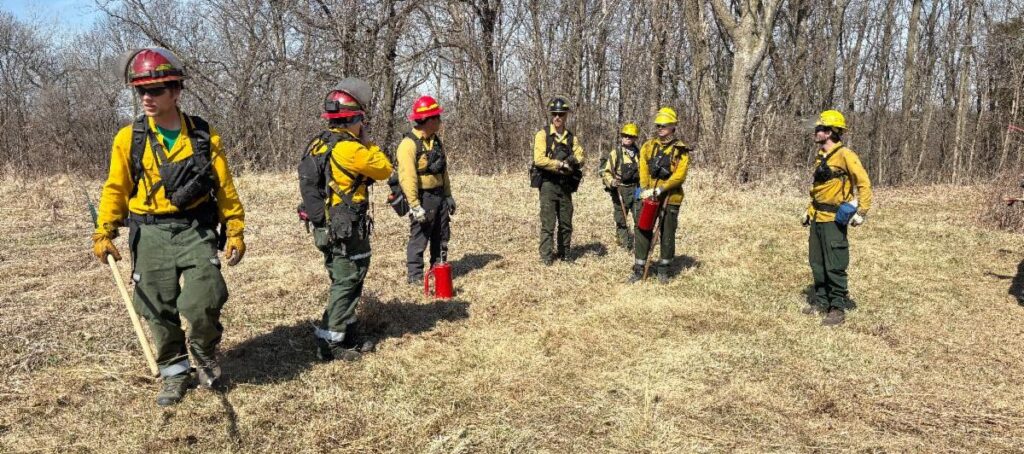
“With the limited capacity we have and the land we manage, we have to bite off what we can actually chew,” Plath said. “We have a lot more burns that we would like to be able to do in any given year.”
To understand the role fire plays in land management, one needs to look back. More than 300 years ago the state of Wisconsin was covered in virgin prairie and great forests.
Native Americans lived here, but the state had virtually no agriculture. It was a true wilderness.
Approximately once every 1 to 3 years fires swept through the state’s great grasslands — sometimes caused by Native Americans and sometimes by lightning strikes. And going back eons even the hardwood forests burned every 500 to 1,000 years.
The fires were all part of the natural cycle of Mother Nature, creating a disturbance that changed the composition and vegetation of the landscape. Deep-rooted prairie grasses emerged and thrived when shallow-rooted brush was cleared by fire. It was an ecosystem where fire played a major role on the landscape.
Enter the Europeans and the clearing of lands for agriculture and the cutting of the forests. Fires still played a role but as fire prevention and fire suppression became more of a science, the natural, uncontrolled fires that shaped the ecosystems became a vestige of the past.
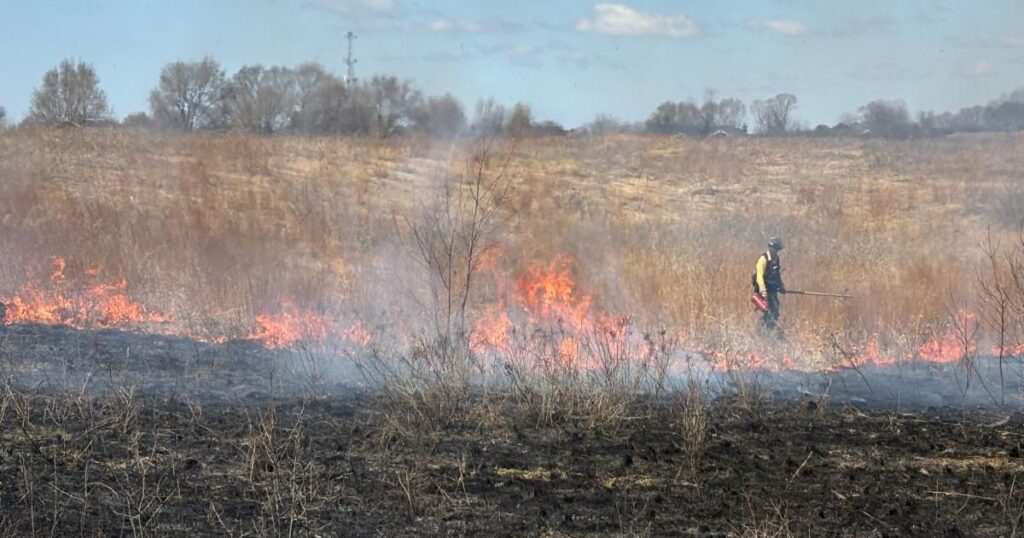
Controlled burns also are a part of the Wisconsin Department of Natural Resources management practices, as well as other environmental groups. Many are members of the Wisconsin Prescribed Fire Council.
Just a few weeks ago the DNR launched a new Prescribed Burn Dashboard, an online tool that tracks burns on private, state, and federal lands throughout Wisconsin. Practitioners can self-report their burns’ dates, acreages, objectives, locations, and fuel types. As of May 2, the dashboard reported 636 controlled burns so far in 2026 in Wisconsin, covering 33,871 acres.
The burns are used to improve wildlife habitat, control invasive plant species, restore and maintain native plant communities and reduce wildfire potential.
Plath said the MVC focuses its efforts on the land where the habitat is in more danger and peril. The spring burn season usually begins in early March and the burns are aimed to allow the native species to thrive and flourish. Not all of the land is conducive to burning. “There are areas that we don’t burn and wouldn’t if we could,” Plath said.
While this year’s spring burn season has ended, the timing varies with the weather from year-to-year. Some years there are fall seasons and some years there is opportunity to burn from late October through the middle of May, Plath said.
The MVC coordinates burns with the DNR and other partner organizations like the Prairie Enthusiasts and Friends of the Blufflands. The organizations share some of the same volunteers who help with the burns.
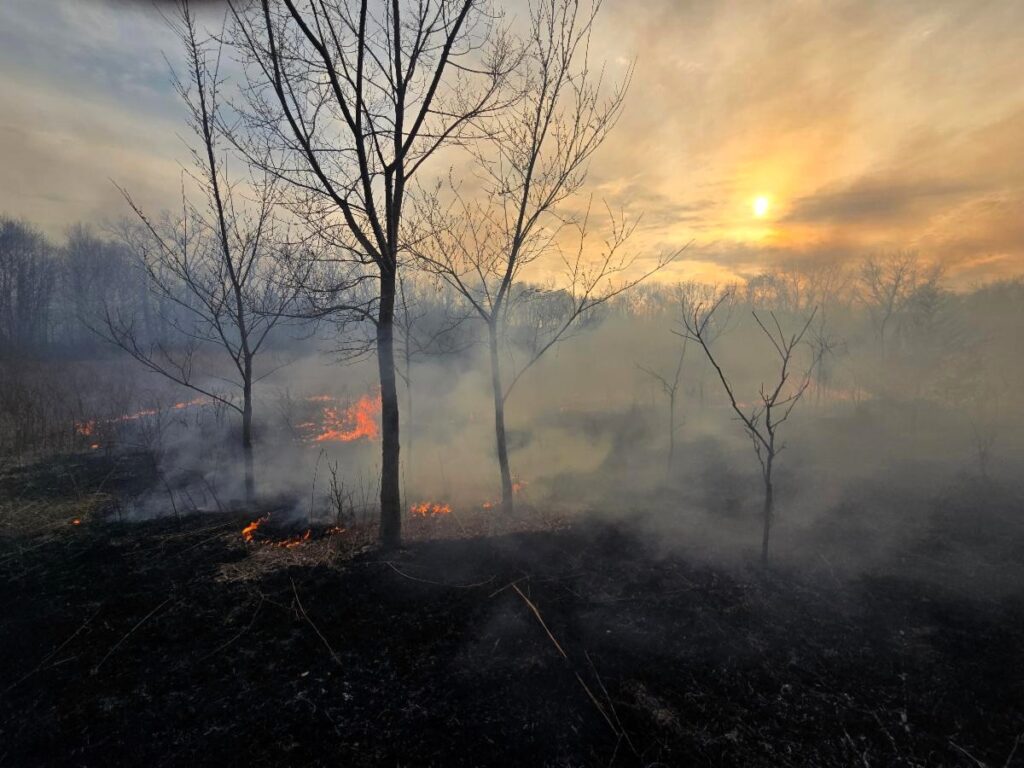
The size of the crew varies depending on the burn, Plath said. An isolated prairie remnant winter burn when there is snowcover may need only three with the larger burns calling for 14 or more. The crew uses an assortment of hand tools, leaf blowers and chainsaws, along with a UTV with a 50-gallon pumper and two trucks with 100-gallon pumpers.
The factors that determine the go-ahead to burn include temperature, wind speed and wind direction – with the latter two a big determinant of smoke dispersal. Long-term weather trends also play a role.
“For some of us, it’s just a feeling,” Plath said of when the conditions are conducive for burning.
Trying to get caught up on the growing burn list is a challenge and more volunteers are always needed, Plath said. No experience is necessary and volunteers will be paired with experienced workers so they are not just thrown into the fire. (My fire pun, not Plath’s. Wouldn’t want to burn a source…)
I know from my amateur controlled fires on the farm that it doesn’t take long for vegetation to sprout after the fire, which stimulates the growth of native plant species such as prairie grasses and wildflowers and activates other seeds.
We can’t turn back time, but fire helps restore some of the landscape to the rich biodiversity it once was.
Chris Hardie spent more than 30 years as a reporter, editor