
Back Home by Chris Hardie
Earthquakes in Wisconsin are pretty rare, with a mild tremor occurring once a decade or so.
But if you felt a slight seismic shift recently, it was not due to tectonic activity, but rather, to me crossing off one task on my honey-do list.
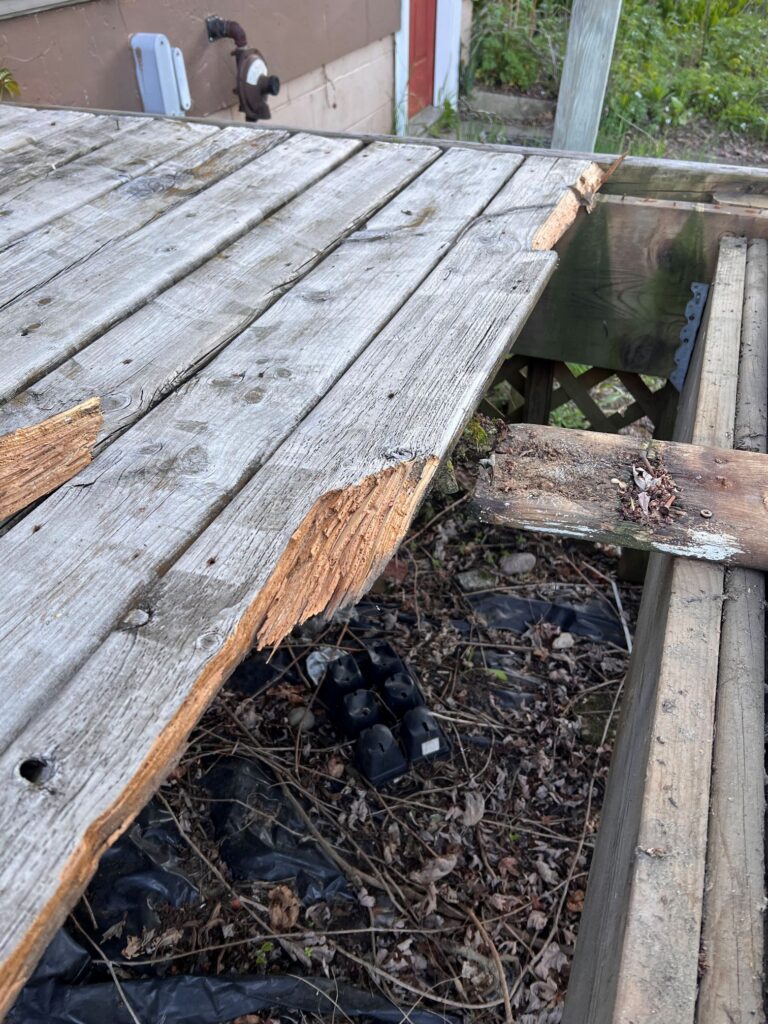
For the past couple of years one of my designated to-do tasks was to rebuild our back porch. The job entailed removing the nearly rotten floor decking and replacing it.
Twenty years ago I remembered one morning when I was standing outside with a piece of paper with intentions to design the porch project. Dad stopped over and asked what I was doing and before long he had his tools out and we started to build. Even then the lumber was mainly recycled, having been removed from a ramp that had been built in the middle 1990s for my late Aunt Sara Clair when she lived in the house.
I have flipped the pressure treated boards over once to extend their usefulness, but they were certainly springy and spongy – two descriptions one does not want associated with flooring. Naturally I did not spring for brand new boards as I was kindly given used decking from some friends who replaced their porch last year.
Actually, the job was delayed by a week because I did not have a square-headed bit that fit the old screws. I searched through at least three sets of drill bits, including ones that I inherited from my father. I smiled when I opened up the sets and figured that we had last used them 20 years ago and then never put them back with their companions.
When I returned with some new bits, I was not shocked to discover that a few of the screw heads were stripped and could not be removed. Undaunted, I resorted to using my wrecking bar, ripped out the old decking and broke off the old screws.
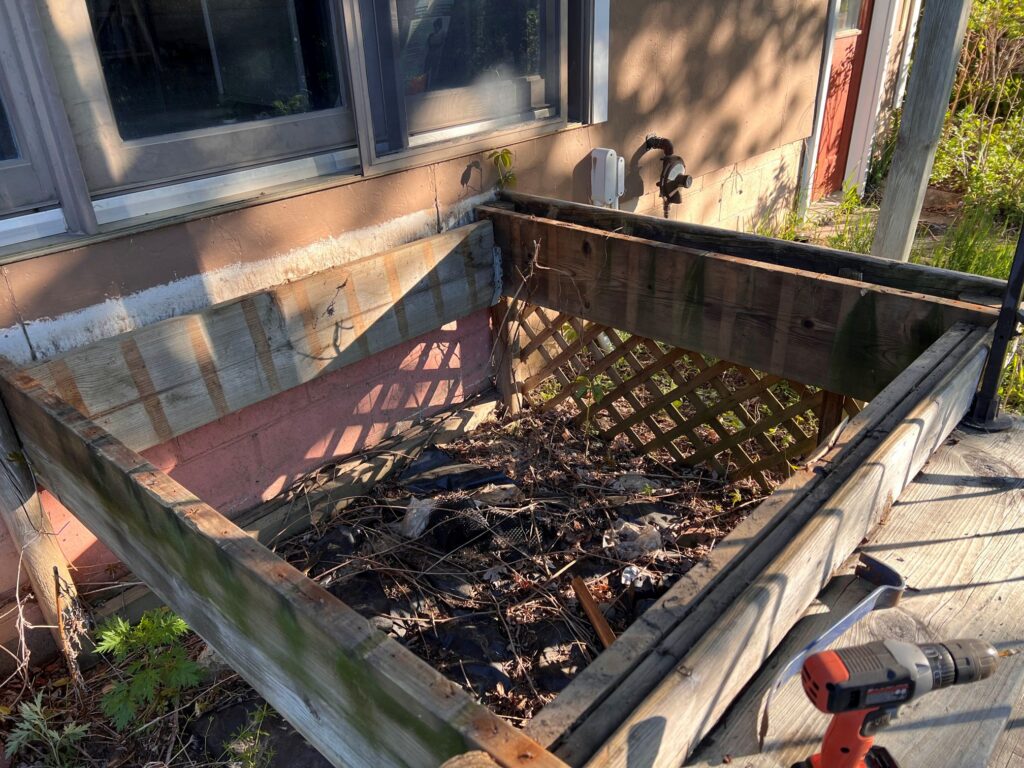
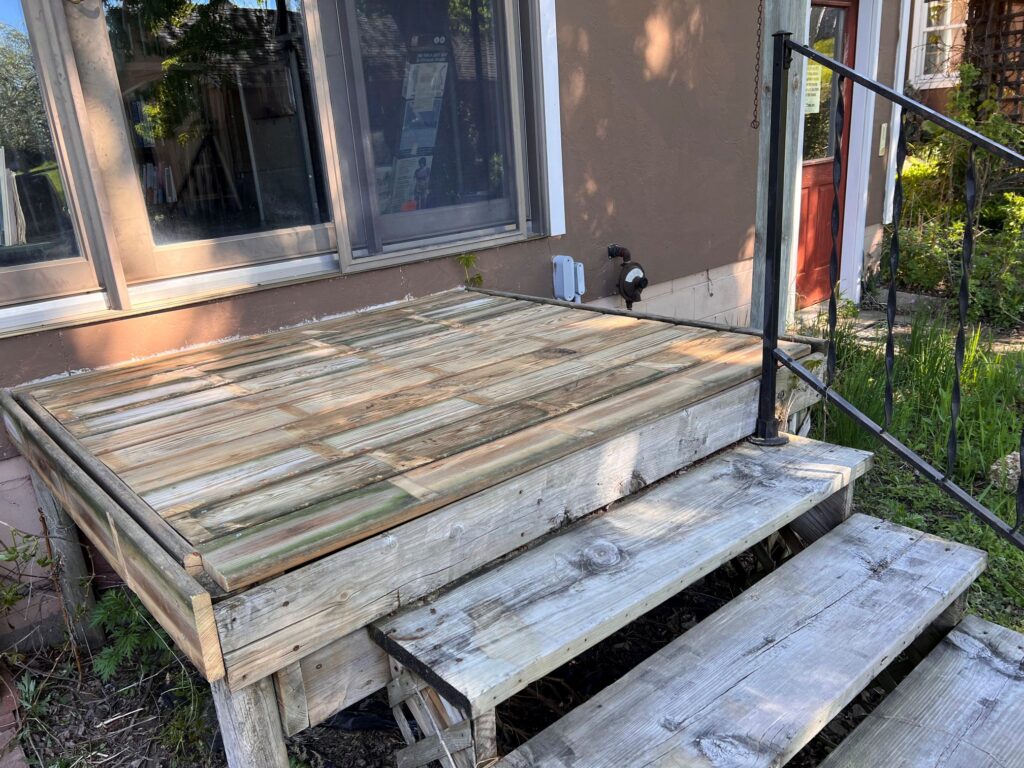
The sub-structure of the porch was still sound with the exception of one support beam. After replacing that, I cut the new used decking to size, recycled some screws from another job and within a couple of hours the porch was fixed.
I told Sherry that the porch was done, with the qualifying words she has heard me utter just a few times over the years – “but it isn’t perfect.” She agreed that it looked OK, but questioned if it were solid.
I assured her it was and she stepped out to test it. Much to her surprise, she conceded that it was better.
I grabbed a beer and sat on the porch steps. I recalled the day two decades ago when Dad and I built the porch to the specifications that matched the Good Enough School of Carpentry from which we graduated.
We laughed at the end of the day when my design blueprint never went past having drawn only one post in the ground. In our typical fashion, we built the porch just winging it. Plans are not needed at the Good Enough School of Carpentry!
It will soon be six years since Dad stopped doing chores on this earthly plane. I still miss him, but he would have proclaimed it a project well done and gladly accepted a beer to celebrate.
The porch will not last forever and still needs a good powerwashing and sealant. But it brought back memories that were built to last.
I’m not a superstitious person, but I wonder at times if someone has placed a curse on my power equipment.
Others may say it’s merely a hex – a short-term spell designed to teach me a lesson. But since I have many generations of slow-learning in my family from the farming side of the equation – perhaps it is indeed a curse that is a severe, long-lasting manipulation of fate.
The rational side of me says it’s merely bad luck and nothing more than the challenge of trying to keep equipment running.
Longtime readers of this column may remember last spring when my rototiller and riding mower broke down within a few days of each other. I fixed the tiller after ordering some parts and walked more than 28,000 steps one day when I had to use the backup walk-behind mower to cut most of the grass.
The riding mower needed a new starter – a little beyond my repair expertise coupled with time constraints. I’m not afraid to attempt repair jobs but I have to place some value upon my input energy and the amount of time it takes to figure it out.
After resting for the winter, I had hoped a fresh start in the spring would bring better luck with the machines. Indeed, the first time I used both they started up and ran fine – with the exception of a large rock that I wedged into the tines of the tiller that caused it to seize up. The drive belt did not break, however, so once I removed the rock, I was back in business tilling the garden.
The second time around with the mower was not as lucky. My wife Sherry ran over a piece of wire – possibly from a flag marker we planted in the ground to identify trees. The wire wound around the shaft of the right front tire and poked a hole in the tire, causing it to go flat and roll off the rim.
That tire has gone flat before and already had an innertube. I removed the tire and was able to air it up, but the innertube had a steady leak. Unless I wanted to run after the mower with the air compressor it was pointless to put it back on without getting the tube replaced.
Thankfully most of the lawn had been mowed at that point, so the backup walk-behind mower only required about 10,000 steps.
Chris Hardie spent more than 30 years as a reporter, editor