
By Bill Barth and Stephanie Klett
It’s often heard that healthcare in America costs too much and delivers too little in terms of positive outcomes.
Maybe there’s another way. Not the only way. Just another way.
There’s a recurring theme at Open Arms Free Clinic, located in Elkhorn, Wisconsin. Those who sign up to help others get back more than they give.
That sentiment was heard from person after person on-site recently when we joined Executive Director Sara Nichols for a tour. Open Arms consists of two buildings – each about 6,000 square feet – and provides medical, dental, visual and behavioral therapy care, along with pharmacy services.
One might ask, So what? There are lots of clinics around.
Not like this one.
Patients accepted at the clinic – more than 70% might be called the working poor – pay nothing for the services. There’s no insurance – not private or public – with the exception of Medicaid in some situations for dental services.
“We interview every patient who wants to enroll here,” Nichols explained. “They need to live or work in Walworth County. We need to make sure they are uninsured. We need to make sure we are using our local resources wisely.”
To be accepted, patients must qualify with an income criteria that is 200% of the federal poverty level.
“That was initiated,” she told us, “because a lot of the other partnership programs (with which they are affiliated) for free medicine, for free consultations, for free imaging, for free mammograms all use income criteria. Our doctors wanted to have the best access to other healthcare so we use an income criteria.”
The first thing one notices upon entering the clinic is a large and welcoming lobby, with a warm greeting from a volunteer.
Beyond the lobby Open Arms is surprisingly spacious. It has a familiar clinic layout – in large part because it was an Aurora facility before Open Arms took occupancy in 2015. There are examination rooms, medical provider offices and stations, lab space, an in-house pharmacy, and behavioral therapy offices. It’s crisp, busy and professional. The dental clinic in the converted adjacent building opened in 2020.
The clinic is open Monday through Thursday – dental services soon will be offered on Fridays as well – and generally with a doctor, nurse practitioner or physician assistant on hand, able to manage prescriptions. Medical professionals donate time, too.
“Volunteers come and say, to be able to witness and honor a person’s dignity and accompany them in their care is so rewarding,” Nichols said. “The patient gets what they need for their health, the volunteers get what they need for their purpose, and this exchange of goodness happens in between.”
It’s accurate to think of the clinic like a large family practice, providing access for general healthcare and maintenance along with being a point of referral for higher-end needs. Open Arms maintains a network of partnerships with health providers that can include free imaging and access to specialists for patients requiring advanced care.
Bringing all that together – volunteers, medical professionals, student interns, equipment and facilities, medicines – is a monumental task that requires know-how, energy and passion. Nichols percolates with all three. She’s on a mission advocating for a better way to take care of people.
“I say that Open Arms is not just an idea, it’s the way of the future,” she told us. “It is truly embedded into everything that we do, because if all of these students can see the wisdom of the retirees or the people who are volunteering, and see that patient-centered care, they will be our future leaders. We will have hope that our healthcare system can change.”
Nichols has been active with the clinic since it opened in 2012, first as a volunteer then as executive director in 2015. She’s a true believer who thinks the free clinic provides a more personalized patient experience and models a system that can work with other providers to improve outcomes while holding down costs.
“There’s this huge middle that has insurance, that’s doing everything right, and still can’t afford their own healthcare,” she said. “You wait until you’re 65 until you can get that Medicare visit, but you’re still having to wait six months or more for that. And then you get all your surgeries, all your knee replacements, all your shoulder replacements, but you have to wait until you’re 65 or greater to have a quality of life.
“Goodness gracious, if we had no profit margin as a primary focus, and we had dignified care and accessible care for all, can you imagine education and work and prosperity in communities? I just want a seat at the table when we’re reconstructing healthcare because I know I have a frontline perspective.”
Open Arms delivers $5 million of care for about $2 million annually, money raised mostly through donors and fundraising events. The clinic serves about 1,200 patients each year with 30 paid staffers bolstered by 250 volunteers. It’s tight, but “we’ve never been in the red. Ever. It’s just being really good stewards for our partners and our resources.”
The commitment of caregivers – paid and unpaid – stands out. We left inspired. Open Arms is just one path in the often bewildering maze that is American healthcare, but it challenges the norm and asks a critical question: Can’t we do better?
For more information go to the website (openarmsfreeclinic.org).
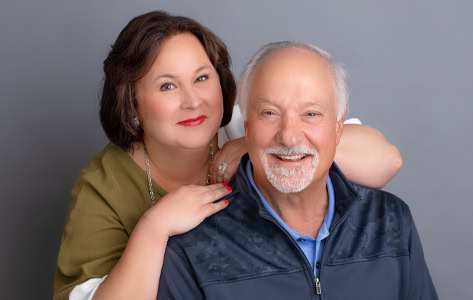
The column is produced by the husband and wife team of Bill Barth and Stephanie Klett. Bill is the former Editor of the Beloit Daily News, and a member of the Wisconsin Newspaper Hall of Fame. Stephanie is the President and CEO of Visit Lake Geneva, and the former Secretary of the Wisconsin Department of Tourism.